Practical Life
Practical Life activities help children develop independence, coordination, concentration, and a sense of responsibility. Through everyday tasks, children imitate adult work and gradually move from care of self to care of others and care of the environment.
Examples include pouring, polishing, sewing, food preparation, hand washing, buttoning, tying, sweeping, folding, cutting and pasting, and social graces.
Sensorial
Sensorial materials help children refine their senses and organize their understanding of the world. Each material isolates a single concept such as size, shape, color, texture, sound, or weight, allowing children to internalize knowledge through hands-on exploration.
Sensorial work prepares the child for later studies in mathematics, geometry, and language.
Mathematics
Mathematics is introduced when a child shows readiness and interest. Using concrete, hands-on materials, children develop a clear understanding of quantity, number relationships, and mathematical concepts before moving toward abstraction.
Activities include number rods, sandpaper numerals, spindle boxes, cards and counters, and the golden bead material.
Language
Language development is nurtured in a rich, respectful, and inclusive environment. We value multilingualism and honor the language spoken at home. Children are immersed in spoken language through stories, songs, rhymes, conversation, and listening activities.
When ready, children are introduced to reading and writing through multisensory materials that support phonetic awareness, vocabulary, and comprehension.
Cultural Enrichment
Cultural studies awaken curiosity and foster a lifelong interest in the world. Children explore geography, history, science, nature, and different cultures through hands-on materials, stories, experiments, and discovery projects.
Geography
Children are introduced to continents, countries, land and water forms, weather, and cultures through colorful puzzle maps and hands-on activities that highlight both diversity and shared humanity.
History
Time is made tangible through timelines, clocks, calendars, and stories, helping children develop an early understanding of sequence, change, and continuity.
Science and Nature
Children explore the natural world through plant and animal studies, experiments, observation, and interaction with natural specimens, encouraging curiosity and respect for living things.
Creative Arts
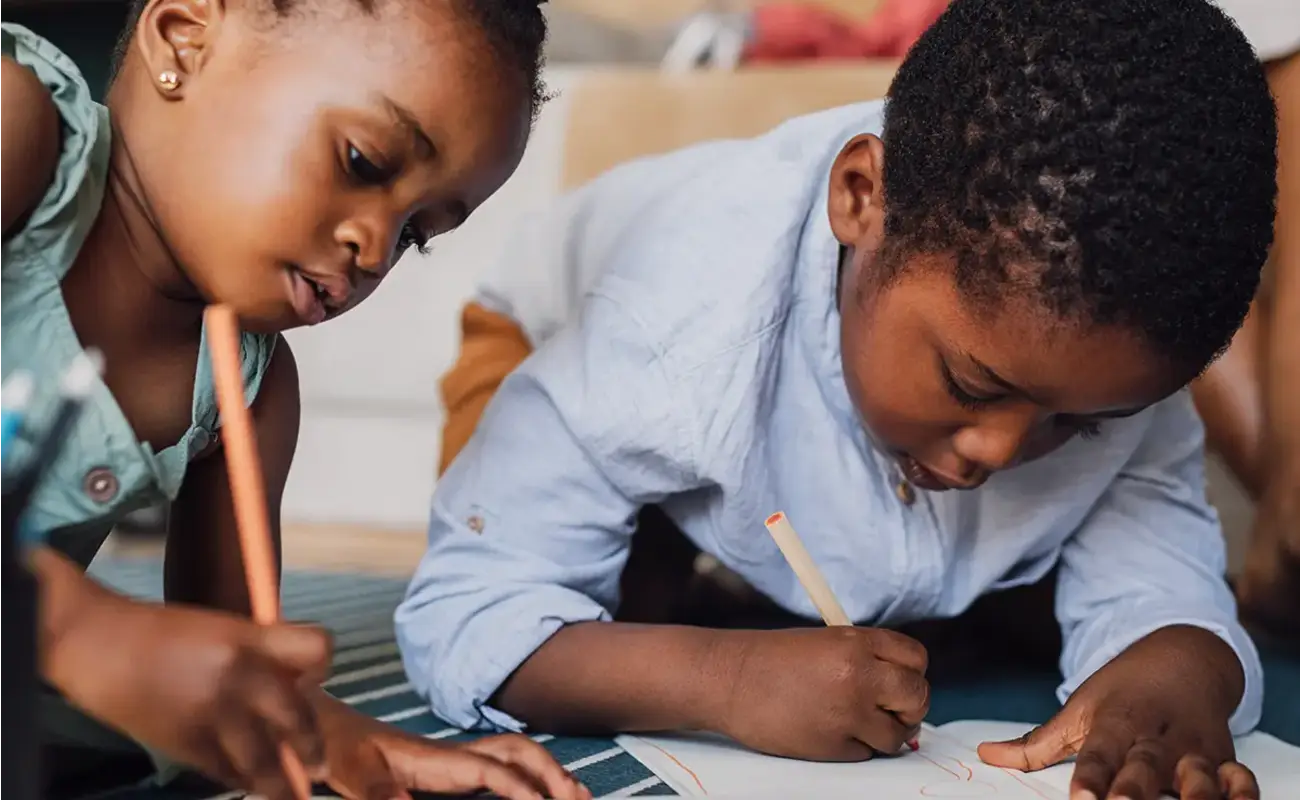
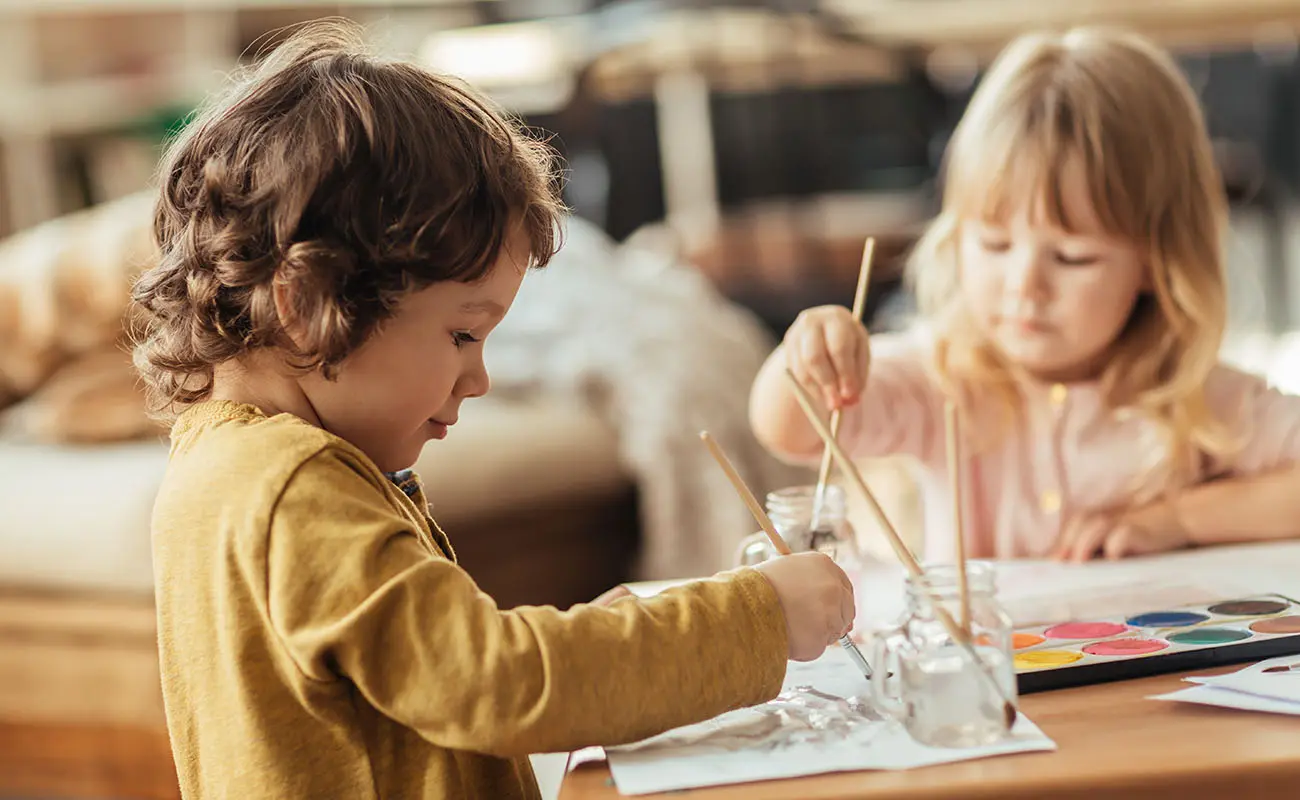
Open-ended art experiences allow children to express themselves freely. A variety of materials and mediums support creativity without limitation, encouraging joy in the process rather than focus on the outcome.
Music and Drama
Children participate in singing, rhythm, movement, and simple drama activities. Music and role play support self-expression, confidence, listening skills, and an appreciation for the arts.
Physical Education
Physical development is supported through gross motor activities and yoga. All movement experiences are non-competitive and designed to promote coordination, balance, strength, and body awareness.
Outdoor Play
Children spend time outdoors every day. Outdoor play supports physical development, social interaction, emotional growth, and imaginative play. Through movement, exploration, and invented games, children learn cooperation, problem-solving, and the importance of rules — all while having fun.